5 Outdoor Learning Activities You Can Do in the Garden with Your Kids This Summer
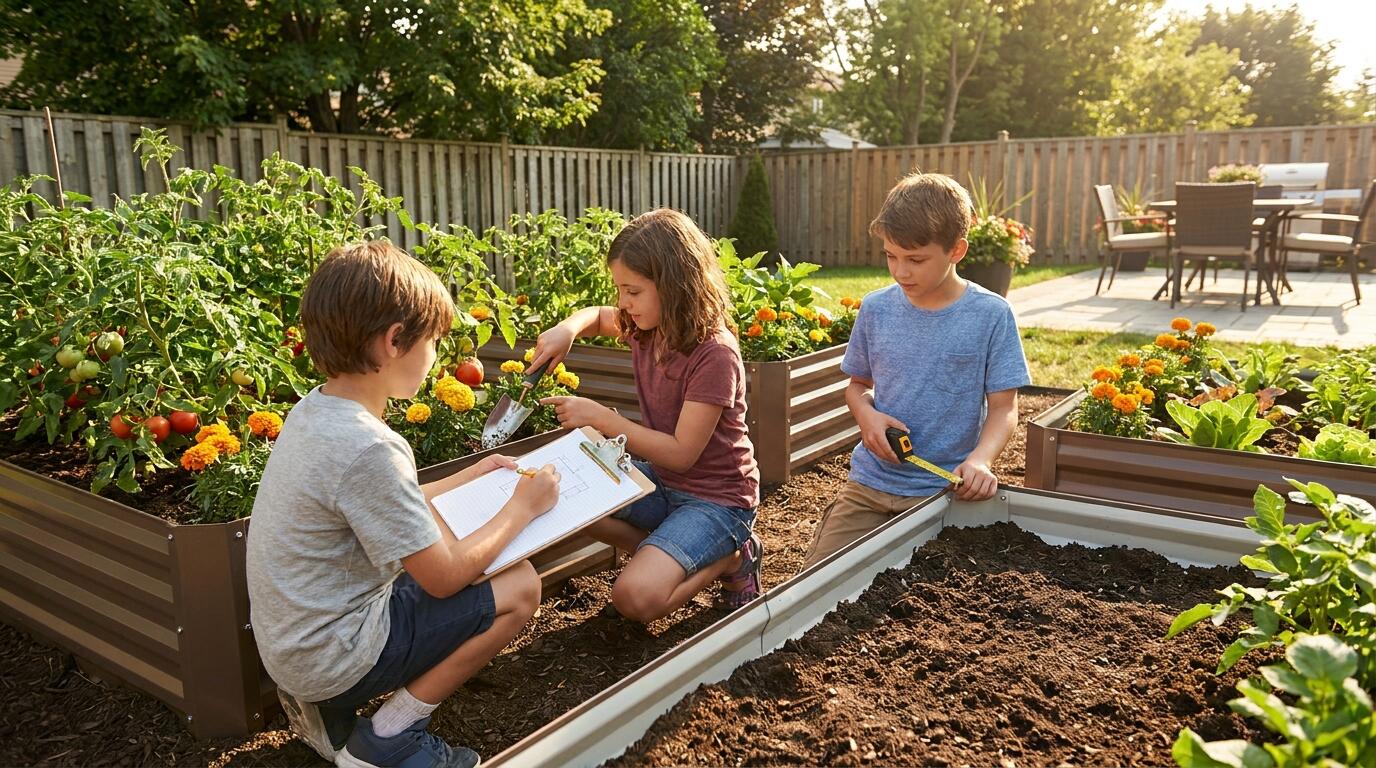
ALT: Kids learning raised bed planting layout in a summer garden with metal garden beds and vegetables
Why Your Backyard Garden Is the Best Summer Classroom for Kids
Have you ever wondered how to make screen-free summer days genuinely exciting for your children — without enrolling in expensive camps or driving across town? The answer might be growing right outside your back door.
In our work helping North American families build thriving outdoor spaces, one pattern we consistently see is this: the garden is one of the most powerful learning environments a child can experience. It’s hands-on, sensory-rich, and deeply connected to real-world science, math, and life skills. And when you pair those experiences with a well-organized raised bed planting layout and durable metal garden beds, the setup practically teaches itself.
This article gives you five outdoor learning activities you can do with your kids this summer — all centered around your home garden. We selected these activities based on three criteria: they’re genuinely educational (covering STEM, ecology, and responsibility), they’re accessible to families with varying garden sizes and budgets, and they naturally reinforce good raised bed gardening habits that benefit the whole family long-term. Whether you’re starting from scratch or already have a raised bed layout in place, each activity below can be adapted to your situation.
Use this list as a seasonal guide. Pick one activity per week, or dive into all five across the summer. Either way, your kids will finish the season with knowledge, confidence, and maybe even a few homegrown tomatoes to show for it.
The Activities: Five Ways to Turn Your Garden into a Learning Lab
Plan and Design a Raised Bed Planting Layout Together
One of the most underrated learning experiences you can give a child is involving them in the planning process — before a single seed goes in the ground. Sitting down together with graph paper (or a free garden planning app) to map out a raised bed planting layout teaches spatial reasoning, basic math, and decision-making in a context that genuinely matters to kids because they get to eat the results.
Start by measuring your metal garden beds together. Anleolife’s galvanized steel raised garden beds come in a wide range of sizes — from compact 4×1.5 ft waist-high options to expansive 12×3 ft configurations — giving you plenty of real-world measurement practice. Have your child calculate the square footage, then research which vegetables or herbs need how much space. This is where raised bed garden layout principles like square-foot gardening become a fantastic math lesson: if a tomato plant needs 2 square feet and your bed is 8×4 ft, how many tomatoes can you fit while still leaving room for basil and marigolds?
Encourage kids to think about companion planting — which plants help each other grow — and sun exposure. Does the tall corn go on the north end so it doesn’t shade the lettuce? These are real design challenges that develop critical thinking.
Best for: School-age children (roughly ages 7–12) who are ready for structured planning; also great for teens who enjoy creative projects with tangible outcomes.
Watch out: Kids can get ambitious fast. Gently guide them toward a realistic plan — it’s better to start with one well-managed bed than to overcommit and feel overwhelmed by mid-July.
Build a Simple Soil System and Learn What Plants Actually Eat
Most kids (and many adults) think plants eat dirt. This summer, change that narrative with a hands-on soil science lesson. Building or refreshing a soil system in your raised bed is one of the most educational and cost-effective gardening activities you can do — and it directly improves your harvest.
Explain to your children that healthy raised bed gardening starts with a layered soil system: typically a base of coarse organic matter (like wood chips or straw) to improve drainage, followed by a mix of topsoil, compost, and aged manure. Each layer has a job. The compost feeds the plants with nutrients; the topsoil provides structure; the drainage layer prevents root rot. As you build the layers together, talk about decomposition, the nitrogen cycle, and why earthworms are a gardener’s best friend.
You can make this even more interactive by starting a small compost bin alongside the garden. Collect kitchen scraps — vegetable peels, coffee grounds, eggshells — and let your child manage the turning and monitoring. Over the summer, they’ll watch raw waste transform into rich, dark compost. That’s chemistry, biology, and environmental stewardship all in one.
Anleolife’s raised beds are designed to hold a generous depth of growing medium, and the taller configurations (including 24″ and 30″ extra-tall options) are especially well-suited for deep-rooted vegetables that benefit from a rich, layered soil system. The galvanized steel walls keep the soil contained and protected, so your carefully built layers stay intact season after season.
Best for: Curious kids who love getting their hands dirty; science-minded children who enjoy understanding why things work; eco-conscious families who want to reduce kitchen waste.
Watch out: Composting requires consistency. Assign your child a specific role (like “compost manager”) with a simple weekly checklist to keep the momentum going through summer break.
Set Up a Basic Drip Irrigation System and Learn About Water Science
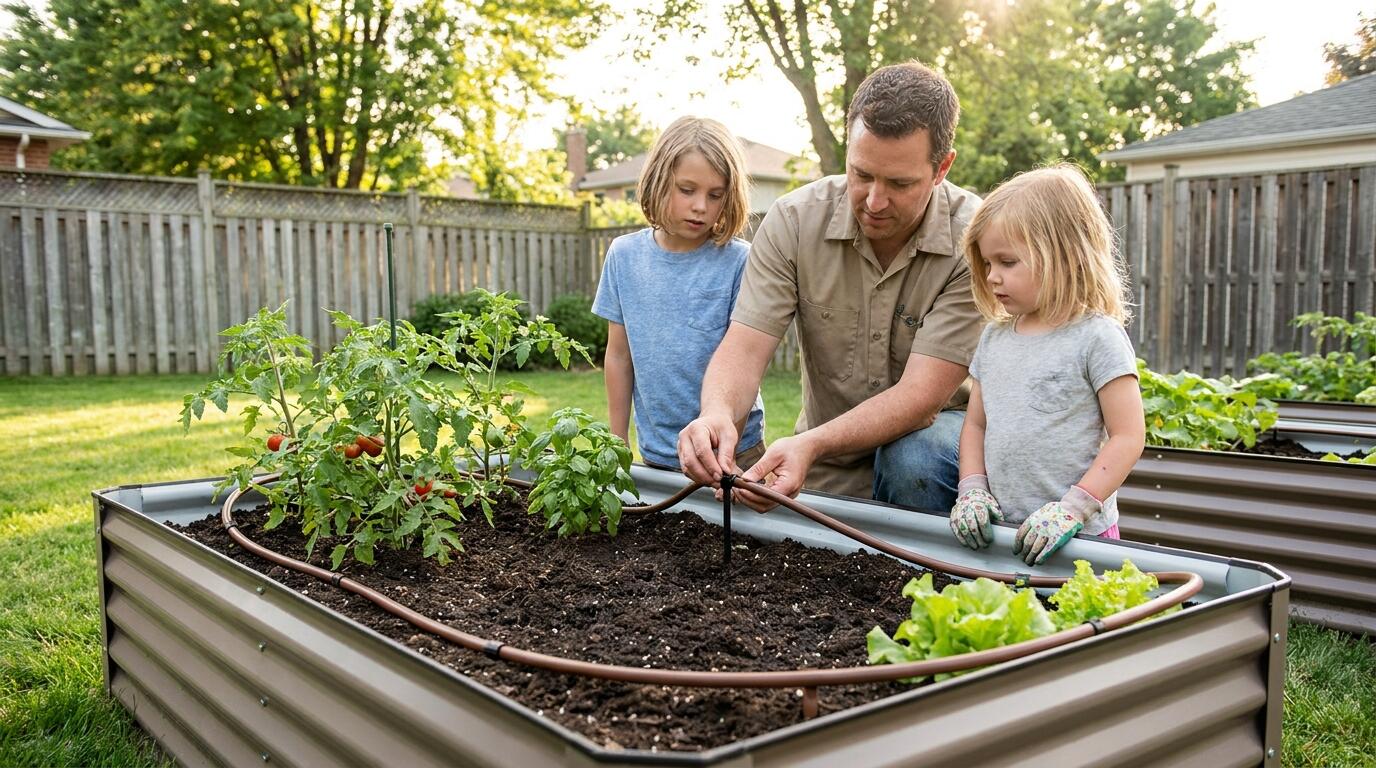
Water is one of the most precious resources in any garden, and teaching kids to use it wisely is a life lesson that extends far beyond the backyard. Setting up a simple drip irrigation system together is a surprisingly accessible project that covers physics, environmental science, and practical engineering — all in an afternoon.
Start with the basics: explain the difference between overhead watering (which can promote fungal disease and waste water through evaporation) and drip irrigation (which delivers water directly to the root zone, where plants actually need it). For a vegetable garden in raised beds, a drip system with properly spaced emitters is one of the best practices for efficient watering. The recommended emitter spacing for a vegetable garden typically depends on your plant spacing and soil type, but placing emitters near the base of each plant — rather than broadcasting water broadly — is a reliable starting point that kids can understand intuitively.
If you want to take it a step further, connecting an automatic drip irrigation timer to your raised garden bed adds a fantastic lesson in automation and resource management. Kids can program the timer, observe how the system runs without manual intervention, and track how much water the garden uses over a week. This is real-world STEM in action.
For budget-conscious families, a basic drip irrigation kit for a single raised bed is one of the most cost-effective garden investments you can make. The upfront cost is modest, and the water savings over a full growing season — combined with healthier plants — deliver clear, measurable ROI. It’s also worth noting that at the end of the season, teaching kids the best practices for winterizing irrigation systems (draining lines, disconnecting emitters, and storing components properly) adds another valuable lesson in seasonal maintenance and protecting your investment.
Best for: Families in drier climates or those with water restrictions; tech-curious kids who enjoy gadgets and systems; parents who want to reduce daily watering chores while keeping the garden thriving.
Watch out: Even simple drip systems require occasional maintenance — checking for clogged emitters or kinked tubing. Make this a weekly “garden inspection” task your child owns.
ALT: Family setting up drip irrigation in a metal raised bed garden layout with kids learning water science and planting techniques outdoors
Start a Garden Journal and Track Plant Growth Over the Summer
Gardening is inherently a practice of observation and patience — two qualities that are increasingly rare and increasingly valuable in a fast-paced digital world. A garden journal transforms the summer growing season into a structured scientific experiment, and it’s one of the simplest, lowest-cost activities on this list.
Give each child their own notebook (or a shared family journal for younger kids) and establish a routine: every few days, they record what they observe. What changed since the last entry? Did the tomatoes grow taller? Did the basil start flowering? Did they spot any pests? Encourage them to sketch plants at different growth stages, note weather patterns, and record what they watered and when.
Over the course of a summer, this journal becomes a genuinely impressive document — a record of the entire growing season from seed to harvest. It also builds a practical knowledge base: next summer, your child will know from their own data which varieties performed best in your specific raised bed layout, which pests appeared in July, and how long it took for their favorite vegetables to mature.
From a learning standpoint, this activity covers scientific method (hypothesis, observation, recording, conclusion), writing skills, and basic data literacy. From a family standpoint, it creates a meaningful keepsake that connects children to the rhythms of the natural world in a way that screens simply cannot replicate.
You can extend the activity by having kids photograph the garden weekly and create a time-lapse comparison at the end of the season. Placed alongside a well-organized raised bed garden layout, the visual transformation is genuinely stunning — and a source of real pride.
Best for: Children who love writing, drawing, or photography; families who want to build a multi-year gardening knowledge base; kids who benefit from structured routines during unstructured summer months.
Watch out: Journaling works best when it’s consistent but not burdensome. Keep entries short and observation-focused rather than essay-length — two to five sentences and a quick sketch is plenty for most kids.
Raise a Small Animal and Learn About the Full Garden Ecosystem
For families who want to take their garden learning to the next level, introducing a small animal — a few backyard chickens or a pair of rabbits — opens up an entirely new dimension of education. This activity moves beyond plants into the full garden ecosystem: food chains, waste cycles, animal behavior, and the relationship between livestock and soil health.
Chickens, for example, produce manure that is one of the most nitrogen-rich natural fertilizers available — a direct, tangible connection to the soil science lesson from Activity 2. Kids who manage a small flock quickly understand that healthy animals produce healthy compost, which produces healthy plants, which produce healthy food. That’s a complete ecosystem loop, learned through daily hands-on experience.
Rabbits are another excellent option for families with smaller spaces or local regulations that restrict poultry. Rabbit manure is often called “cold” manure, meaning it can be applied directly to garden beds without the composting period that chicken manure requires. This makes it an especially practical and immediate soil amendment that kids can manage themselves.
Anleolife’s product ecosystem extends beyond garden beds to include chicken coops and rabbit hutches — purpose-built structures designed to integrate naturally into a home garden setup. This means your planting, raising, and beautification spaces can all work together as a cohesive outdoor environment, which is exactly the kind of holistic, systems-level thinking we want to cultivate in the next generation of gardeners and stewards.
Building the perfect backyard for family weekends often starts with exactly this kind of integrated thinking — combining garden beds, animal enclosures, and thoughtful décor into a space that’s both functional and genuinely enjoyable for the whole family.
Best for: Families with adequate outdoor space and local zoning that permits small livestock; children who are ready for daily responsibility; families interested in moving toward a more self-sufficient lifestyle.
Watch out: Raising animals is a year-round commitment, not just a summer project. Make sure the whole family is aligned before bringing animals home, and research local regulations in advance.
Quick Comparison at a Glance
Here’s a side-by-side summary to help you decide which activities fit your family’s summer best:
| Activity | Best For | Key Strength | Limitation |
|---|---|---|---|
| Plan a Raised Bed Planting Layout | Ages 7–12; math and design lovers | Teaches spatial reasoning, planning, and plant science | Requires some adult guidance to stay realistic |
| Build a Soil System | Hands-on learners; eco-conscious families | Covers biology, chemistry, and waste reduction | Composting requires consistent weekly attention |
| Set Up Drip Irrigation | Tech-curious kids; water-conscious families | Real-world STEM; reduces daily watering chores | Occasional maintenance needed for emitters/tubing |
| Start a Garden Journal | Writers, artists, and structured learners | Builds observation skills and a lasting keepsake | Needs a consistent routine to be most effective |
| Raise a Small Animal | Families with space; responsibility-ready kids | Full ecosystem learning; natural soil amendment | Year-round commitment; check local regulations first |
Each activity stands on its own, but they’re designed to work together. A family that plans a raised bed layout, builds a healthy soil system, sets up irrigation, tracks progress in a journal, and raises a small animal has essentially built a complete, living learning environment — one that delivers educational value all summer long and well beyond.
How to Choose the Right Activities for Your Family
Not every activity will be the right fit for every family, and that’s perfectly fine. Here’s how to think through the decision:
If you’re just starting out and don’t yet have raised beds in place, begin with Activity 1 (planning the layout) and Activity 2 (building the soil system). These are your foundation activities — everything else builds on them. Anleolife’s galvanized steel and rust-resistant raised garden beds are built to last up to 20 years, making them a one-time investment that pays dividends across your child’s entire childhood and beyond.
If you already have a garden established and want to deepen the learning, Activities 3 (irrigation), 4 (journaling), and 5 (raising animals) are natural next steps that add complexity and responsibility without requiring you to rebuild from scratch.
If you’re working with a small urban space, focus on Activities 1–4. Compact Anleolife beds — including the 4×1.5 ft waist-high option and the 18″ tall 4×4 ft configuration — are specifically designed for smaller footprints without sacrificing growing capacity. A well-planned raised bed layout can produce a surprising amount of food even in a modest backyard or patio.
If budget is a primary consideration, start with the journal (essentially free) and the soil system (low cost if you’re composting kitchen scraps). The drip irrigation setup is a modest upfront investment that pays back quickly in water savings and plant health. The raised beds themselves, while a real purchase, are a long-term asset — 20 years of growing seasons across a product built to last makes the per-year cost genuinely low.
A common misconception worth addressing: many parents assume garden activities are only meaningful for kids who already show an interest in nature. In our experience, the opposite is often true — children who seem indifferent to the outdoors frequently become deeply engaged once they have ownership over something living. Give a child their own corner of a raised bed, their own seeds, and their own journal, and watch what happens.
Frequently Asked Questions FAQ
Q1: How do I choose the best materials for raised garden beds that will last long?
When selecting materials for raised garden beds, durability and safety are the two most important factors. Galvanized steel is widely regarded as one of the best long-term options — it resists rust, withstands temperature extremes, and doesn’t leach harmful chemicals into your soil the way some treated woods can. Anleolife’s galvanized steel raised garden beds are built for a lifespan of up to 20 years, making them a genuinely cost-effective choice for families who plan to garden for the long haul. Look for thick-gauge steel and a quality zinc coating for maximum longevity.
Q2: Is raised bed gardening suitable for young children, and is it safe?
Raised bed gardening is one of the most child-friendly gardening formats available. The elevated structure reduces the need to kneel or bend, making it accessible for kids of all ages. Metal raised beds with smooth, rolled edges (like Anleolife’s designs) minimize sharp-edge risks. From a soil safety perspective, galvanized steel beds don’t introduce contaminants, so you have full control over what goes into your growing medium. Always supervise young children around tools, and choose age-appropriate tasks — toddlers can water and harvest; older kids can plant, plan, and maintain.
Q3: How long does it take to set up a raised bed garden for kids’ summer activities?
Setup time varies by activity and bed size, but most families can have a basic raised bed assembled, filled with a soil system, and ready for planting within a single weekend. Anleolife’s modular raised garden beds are designed for straightforward assembly without specialized tools. Once your beds are in place, the drip irrigation system can typically be set up in a few hours. With Anleolife’s nationwide warehouse network across six states, delivery arrives within 3–8 business days — meaning you can realistically go from ordering to planting within two weeks, even if you’re starting from scratch at the beginning of summer.
Summary
Summer doesn’t have to mean passive entertainment. The garden is one of the richest, most affordable learning environments available to families — and with the right setup, it delivers educational value that lasts well beyond the season.
Here are the three core takeaways from this guide:
First, outdoor garden activities are genuinely multi-disciplinary. A single summer in a well-organized raised bed garden can cover math, biology, chemistry, environmental science, writing, and personal responsibility — all through direct experience rather than textbooks.
Second, the quality of your setup matters. Durable metal garden beds with a thoughtful raised bed planting layout create a stable, long-lasting foundation that grows with your family. Products built to last 20 years aren’t just a purchase — they’re an investment in a decade-plus of learning seasons.
Third, start simple and build gradually. You don’t need to implement all five activities at once. Pick one or two that fit your family’s current space, budget, and energy, and expand from there. The garden will reward every step forward.
The best time to start is now — while summer is still ahead of you and your kids still have the whole season to grow.
Ready to build a garden your whole family can learn in? Explore Anleolife’s full range of galvanized steel and rust-resistant raised garden beds at anleolife.com — available in sizes from compact waist-high planters to expansive 12×3 ft growing beds. With delivery in 3–8 business days through our nationwide warehouse network in California, Texas, Florida, New York, Illinois, and Washington, your summer garden project is closer than you think. Shop directly on Anleolife.com or find our products on Amazon, Walmart, Home Depot, Lowe’s, and Wayfair. From your first raised bed to a full planting-and-raising ecosystem — we grow with you.
References
- Birdie’s Garden Products. “Metal Raised Garden Beds – Global”.
- Vego Garden. “Classic Metal Garden Beds & Planter Boxes”.
- Metal Garden Beds. “GRANDE”.
Note: Standards and product information may be updated; please check the latest official documents or consult professional advisors.
发表回复