5 Ways to Keep Your Raised Bed Garden Hydrated During a Summer Heat Wave
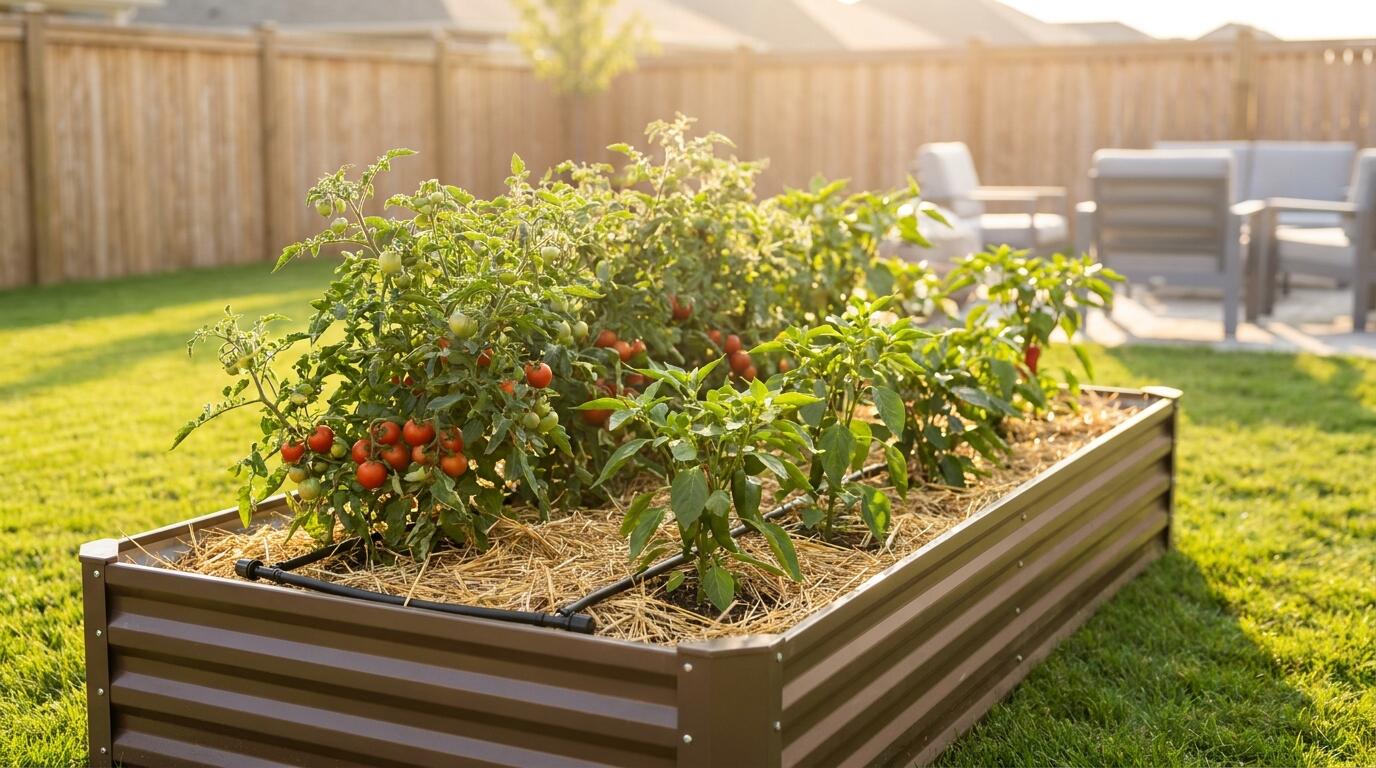
ALT: Raised bed garden layout with mulch and drip irrigation staying hydrated in summer heat
Keeping Your Raised Bed Garden Layout Hydrated When Temperatures Spike
Summer heat waves are becoming a routine test for home gardeners, and raised beds—because they sit above grade and drain faster than in-ground plots—dry out noticeably quicker than traditional row gardens. A well-planned raised bed garden layout does more than look tidy; it determines how efficiently water reaches roots, how much you’ll spend on hoses and mulch, and whether your tomatoes survive a string of 95-degree afternoons. This article distills five field-tested strategies for protecting your raised bed planting layout from heat stress, drawn from what we consistently observe working with home gardeners across different climates and bed configurations.
The five methods below were chosen because they address the most common failure points we see in raised bed layout planning: uneven watering, exposed soil, poor plant grouping, and materials that heat up the root zone. Read through each one, then use the comparison table and decision guide to match the right combination to your own garden bed, climate zone, and time budget.
Five Ways to Protect Your Raised Bed Layout From Summer Heat
Deep, Infrequent Watering Timed to Your Raised Bed Garden Layout
Deep, infrequent watering trains roots to grow downward into cooler, moisture-retentive soil rather than staying shallow and vulnerable to surface evaporation. Watering early in the morning, before the sun climbs, reduces water loss to evaporation and gives foliage time to dry, which also lowers disease pressure. In a raised bed garden layout, this means watering slowly enough that moisture penetrates the full depth of the soil profile rather than just wetting the top inch.
- Best for: Established vegetable beds with deep-rooted crops like tomatoes, peppers, and squash.
- Watch out: Shallow beds under roughly 12 inches dry out faster regardless of watering schedule, so depth matters as much as frequency.
Mulching to Protect the Soil System Beneath Your Raised Bed Layout
Mulch is a protective layer of organic or inorganic material spread over exposed soil that reduces evaporation, moderates soil temperature, and suppresses weeds competing for water. A two-to-three-inch layer of straw, shredded leaves, or wood chips can measurably slow moisture loss from the soil system in a raised bed, according to Savvygardening, a widely referenced resource on raised bed vegetable garden design. This is one of the lowest-cost, highest-impact steps in any raised bed planting layout during extended dry heat.
- Best for: Any raised bed, especially newly planted beds with young transplants that have shallow root systems.
- Watch out: Mulch piled directly against plant stems can trap excess humidity and encourage rot, so leave a small gap around each stem.
Drip Irrigation and Soaker Hoses for Even Coverage Across the Bed
Drip irrigation is a low-pressure watering system that delivers water directly to the soil near plant roots through emitters or porous tubing, minimizing waste from overspray and runoff. Unlike overhead sprinklers, drip lines and soaker hoses can be routed to follow the exact contours of a raised bed garden layout, so every row—dense or sparse—gets consistent moisture. Pairing drip lines with a simple timer removes the guesswork of daily watering during a heat wave, which matters most when you’re away from home or juggling a busy schedule.
- Best for: Larger or multi-bed setups, and gardeners who travel or can’t water manually every day.
- Watch out: Emitters can clog with mineral deposits over time, so periodic flushing keeps flow rates consistent.
Grouping Plants by Water Needs in Your Raised Bed Planting Layout
Grouping plants with similar water requirements together—a practice sometimes called hydrozoning—prevents the common mistake of overwatering drought-tolerant herbs while under-watering thirsty vegetables in the same bed. A thoughtful raised bed planting layout places moisture-loving crops like lettuce and cucumbers near irrigation sources, while rosemary, thyme, and other Mediterranean herbs sit in drier zones. This approach, described in raised bed layout planning guides such as Journey with Jill’s layout templates, reduces both water waste and plant stress during peak heat.
- Best for: Mixed vegetable-and-herb beds where different species have very different moisture tolerances.
- Watch out: Reworking an existing layout mid-season can disturb root systems, so plan hydrozoning at the start of the growing season when possible.
Choosing a Raised Bed Material That Keeps Roots Cooler
The material your raised bed is built from directly affects how much heat transfers into the soil and root zone during a heat wave. Anleolife’s Galvanized Steel Raised Garden Beds and Rust-Resistant Raised Garden Beds are engineered for long-term outdoor durability, with a documented lifespan of 20 years, and their construction avoids the warping and rapid heat absorption issues associated with thin, low-grade metal or untreated wood. A taller bed design, such as the Heavy Duty Raised Garden Beds or Modular Raised Garden Bed lines, also holds a deeper soil reservoir, which buffers root temperature swings better than shallow containers.
- Best for: Gardeners planning a long-term raised bed garden layout who want to minimize material degradation and heat-related stress over multiple seasons.
- Watch out: Darker metal finishes can absorb more surface heat in direct sun, so positioning beds with partial afternoon shade or adding mulch on top helps offset this.
Quick Comparison at a Glance
| Item | Best For | Key Strength | Limitation |
|---|---|---|---|
| Deep, infrequent watering | Established, deep-rooted vegetables | Encourages resilient root growth | Requires attentive scheduling in extreme heat |
| Mulching the soil system | Any raised bed, especially new transplants | Low cost, strong evaporation control | Needs a gap around stems to avoid rot |
| Drip irrigation / soaker hoses | Multi-bed setups, busy or traveling gardeners | Consistent, low-waste coverage | Emitters need periodic maintenance |
| Grouping plants by water needs | Mixed vegetable-and-herb beds | Reduces both overwatering and underwatering | Best planned at season start |
| Choosing a durable bed material | Long-term raised bed garden layout planning | Better root-zone temperature buffering | Dark finishes may need shade or mulch |
How to Choose the Right Combination for Your Raised Bed Layout
The right combination depends on your bed’s size, your climate, and how much daily attention you can realistically give your garden. A single small bed near the kitchen door might only need deep watering plus mulch, while a multi-bed backyard setup benefits from drip irrigation layered on top of thoughtful plant grouping.
A common misconception is that more frequent, shallow watering is safer during a heat wave than deep, infrequent watering. In reality, frequent shallow watering trains roots to stay near the surface, making plants more vulnerable, not less, when a heat wave stretches on. According to guidance referenced by the U.S. Department of Agriculture on sustainable home gardening practices, deeper and less frequent irrigation generally produces more resilient plants than light daily sprinkling.
If you’re building a new raised bed garden layout from scratch, start by mapping sun exposure and water access before placing beds, a step covered in detail in resources like this guide to designing a backyard with garden beds, seating, and décor. Retirees and empty nesters managing a garden alone often find that fewer, larger beds with drip irrigation reduce daily labor more than several small scattered beds. Urban micro-gardeners with limited space should prioritize mulch and material choice first, since drip systems can be added modularly later as the raised bed planting layout expands.
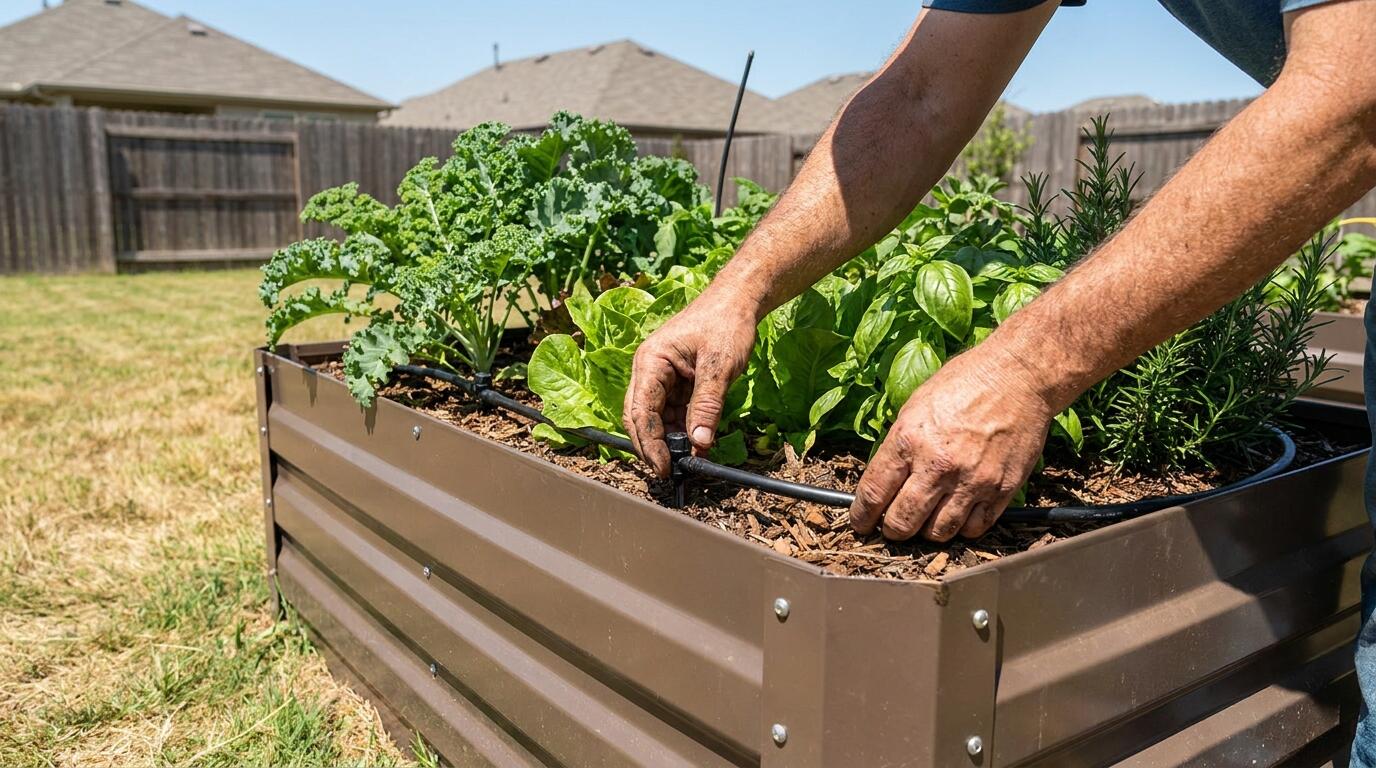
ALT: Gardener adjusting drip irrigation lines within a raised bed layout during summer heat
Common Questions
How often should I water a raised bed garden layout during a heat wave?
Most raised beds need watering when the top two to three inches of soil feel dry, which during a sustained heat wave can mean daily or near-daily checks. Deep watering in the early morning, rather than light frequent sprinkling, helps roots access moisture stored deeper in the soil system, per general guidance from agricultural extension programs on vegetable garden care.
Is mulch necessary for every raised bed layout, even small container-style beds?
Yes, mulch benefits nearly every raised bed layout, including small container-style setups, because exposed soil surfaces lose moisture to evaporation far faster than mulched ones. A two-to-three-inch layer of straw or shredded leaves is generally sufficient, and it also moderates soil temperature swings that stress young roots during extreme heat.
How long do galvanized steel raised beds last compared to wood in hot climates?
Anleolife’s galvanized steel raised garden beds are built with a 20-year lifespan, significantly outlasting most untreated wood beds, which tend to warp, rot, or degrade faster under repeated heat and moisture cycles. This durability makes steel a practical long-term investment for anyone planning a permanent raised bed garden layout in a hot summer climate.
Key Takeaways
- Deep, infrequent watering builds more heat-resilient root systems than frequent shallow watering.
- Mulching the soil system is one of the lowest-cost, highest-impact ways to protect any raised bed layout from evaporation.
- Drip irrigation and soaker hoses deliver even coverage across a raised bed garden layout with minimal daily effort.
- Grouping plants by water needs in your raised bed planting layout reduces both overwatering and drought stress.
- Durable, well-designed bed materials, such as galvanized steel with a 20-year lifespan, help buffer root-zone temperature swings over many seasons.
Start by auditing your current raised bed layout for the weakest link—whether that’s inconsistent watering, bare soil, or an aging bed frame—and address that gap first before layering on additional strategies.
Anleolife supports every stage of that upgrade with a nationwide U.S. warehouse network strategically located in California, Texas, Florida, New York, Illinois, and Washington, ensuring delivery within 3–8 business days so your garden improvements never have to wait. Our raised garden beds, soil systems, and complementary garden solutions are available through Amazon, Walmart, Home Depot, Lowe’s, Wayfair, and directly at the Anleolife website, with consistent quality and after-sales support across every channel. From your first galvanized steel garden bed to a fully integrated planting, raising, and beautification ecosystem, our modular designs are built to expand as your garden grows. Explore the current lineup and start planning a heat-resilient raised bed garden layout today.
References & Further Reading
- Savvygardening. “4×8 Raised Bed Vegetable Garden Layout Ideas”.
https://savvygardening.com/4×8-raised-bed-vegetable-garden-layout/
- Journey with Jill. “Raised Bed Layout Template”.
https://journeywithjill.net/wp-content/uploads/2023/04/Raised-Bed-Layout-Designs.pdf
- Pinterest. “Raised Garden Bed Ideas”.
https://www.pinterest.com/alethead74/raised-garden-bed-ideas/
- U.S. Department of Agriculture. Official resource on sustainable home and community gardening practices.
- U.S. Environmental Protection Agency, WaterSense program. Official guidance on outdoor water efficiency.
Note: Standards may be updated; please check the latest official documents or consult professional advisors.
发表回复