Garden Layout Ideas for Corner Lots and Awkward Backyard Shapes
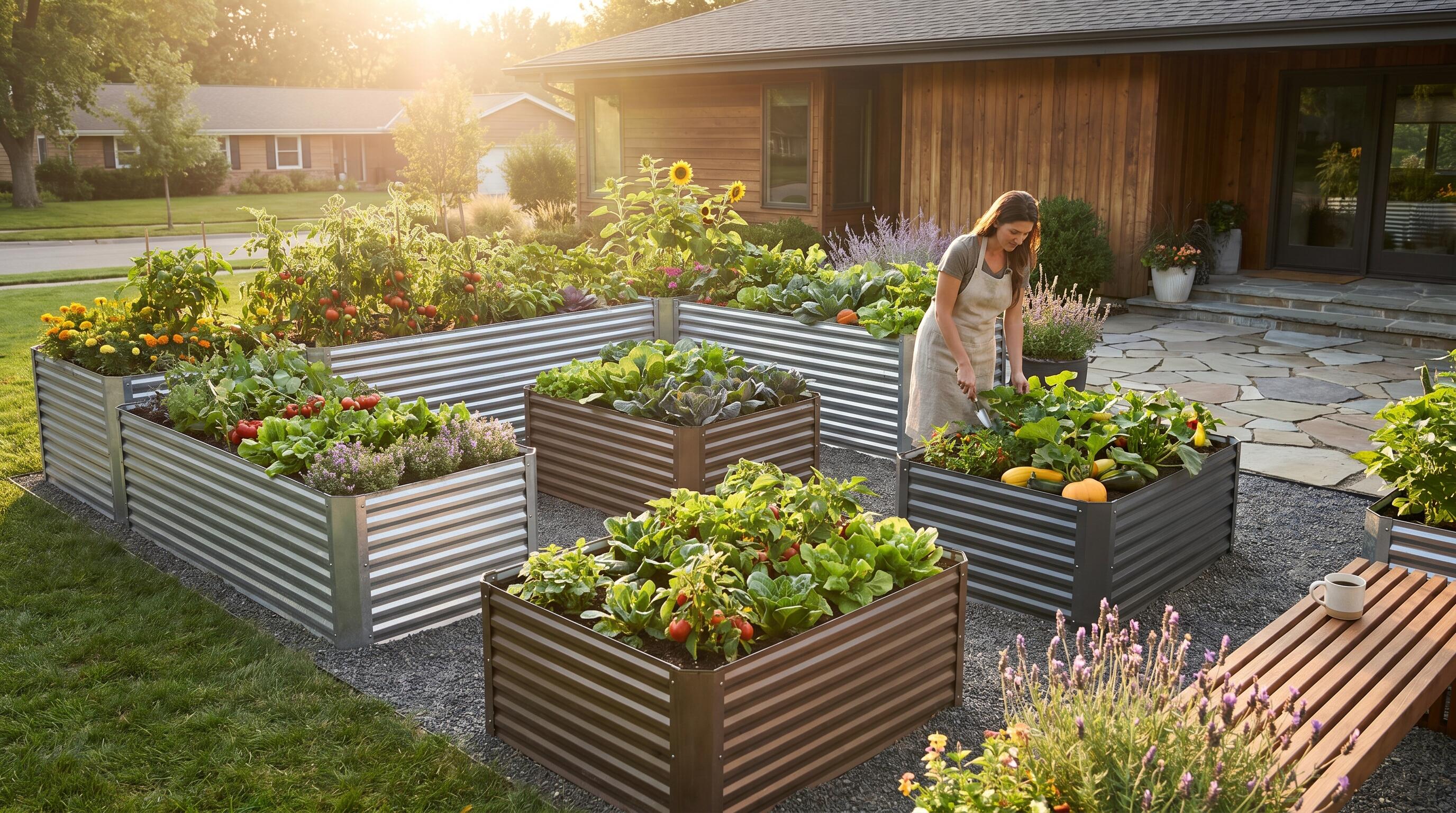
ALT: Corner lot garden layout with raised garden beds arranged creatively in awkward backyard spaces
Making the Most of Corner Lots and Odd-Shaped Backyards with Smart Garden Layout Ideas
Key Conclusion: Transforming a corner lot or oddly shaped backyard into a thriving garden is entirely achievable with the right raised bed garden layout strategy. By using a thoughtful raised bed planting layout that respects your property’s natural angles and contours, you can convert unused triangular spaces, narrow strips, and irregular boundaries into productive, beautiful growing zones. A well-planned raised bed layout not only maximizes every square foot but also adds structure, curb appeal, and long-term value to your outdoor space.
Not every home comes with a perfectly rectangular backyard. Corner lots, L-shaped yards, sloped terrain, and oddly angled fence lines are extremely common — and for many gardeners, they feel like obstacles rather than opportunities. The truth is, these unconventional spaces often offer more planting potential than a standard square yard, provided you approach them with the right plan.
In this guide, we’ll walk you through practical, visually appealing garden layout strategies tailored specifically for non-standard outdoor spaces. Whether you’re working with a tight corner, a diamond-shaped lot, or a backyard with uneven levels, you’ll find actionable solutions that blend function with beauty — and we’ll show you how Anleolife’s versatile raised garden bed collection can help bring each concept to life.
Who This Guide Is For: Identifying Your Garden Situation
✅ Applicable Scenarios:
- Homeowners with corner lots who have triangular or wedge-shaped yard sections sitting unused
- Gardeners dealing with L-shaped, irregular, or oddly angled backyards that resist traditional rectangular layouts
- Urban micro-gardeners working with narrow side yards, sloped surfaces, or fence-line spaces
- Empty nesters or retirees looking to redesign underutilized yard areas into productive, low-maintenance garden zones
- Eco-conscious growers wanting to maximize food production without expanding their overall footprint
❌ Not Applicable/Cautions:
- Gardeners with fully flat, rectangular yards who don’t face spatial constraints (standard layout guides may be more suitable)
- Properties with severe drainage issues or hardpan soil that require professional landscaping intervention before any raised bed installation
- HOA-governed communities where raised structures or garden beds require prior approval — always check local regulations before beginning
Why Awkward Backyard Shapes Are Actually a Hidden Advantage
Many homeowners look at a corner lot or an oddly angled yard and immediately feel frustrated. Standard gardening books assume you’re working with neat rows in a symmetrical space. Garden center displays feature perfectly rectangular raised beds lined up in tidy grids. When your yard doesn’t fit that mold, it’s easy to feel like productive gardening just isn’t possible for you.
But here’s the shift in perspective that experienced gardeners have long embraced: irregular spaces force creativity, and creative gardens are often the most visually stunning and functionally efficient ones.
According to the U.S. Department of Agriculture’s National Gardening Survey, over 35% of American households participate in some form of food gardening — and a growing segment of those gardeners are working in non-traditional suburban and urban spaces. The demand for flexible, adaptable growing solutions has never been higher.
Corner lots, in particular, offer a few distinct advantages. First, they typically receive sunlight from multiple directions throughout the day, reducing the shadow problems that plague backyards hemmed in on all sides by fencing or structures. Second, the extra boundary exposure often means better airflow, which reduces fungal disease pressure on plants. Third, the triangular or wedge-shaped zones created by diagonal property lines are actually ideal for focal-point garden installations — a single large round or L-shaped raised bed can anchor the entire space visually.
Irregular backyards — those with jogs, angles, or mixed levels — similarly benefit from modular thinking. Rather than trying to impose a rigid grid on a space that resists it, the smartest approach is to follow the natural lines of the yard and use raised beds as both functional planters and structural design elements.
The key principle underlying all successful non-standard garden layouts is this: match your planting zones to the geometry of your space, rather than fighting against it. Raised garden beds are the single most effective tool for doing this, because they can be sized, arranged, and combined in ways that standard in-ground planting simply cannot match.
If you’re exploring your first raised bed setup or reconsidering an existing layout, Anleolife’s full range of galvanized and rust-resistant raised garden beds provides the flexibility and durability needed to design around any yard shape — with a product lifespan of up to 20 years, these beds represent a long-term investment in your outdoor living space.
Core Layout Strategies: Turning Constraints into Design Features
Three-Step Quick Start for Non-Standard Yard Layouts
Step 1: Map Your Space Accurately
Before buying a single bed or digging a single hole, spend 30–60 minutes creating a scaled sketch of your yard. Measure all boundary lines, note any angles or jogs, and mark the location of permanent features like trees, utility boxes, fences, and gates. Identify where sunlight hits at different times of day — most food plants need at least 6 hours of direct sun. This map becomes your design foundation and prevents costly mistakes later.
Step 2: Identify Your Functional Zones
Divide your mapped yard into functional zones based on what you want to grow and how you want to use the space. Common zones include: a primary vegetable growing area (needs maximum sun), an herb or cutting garden (can tolerate partial shade), a pollinator or flower border (excellent for filling triangular corners), and a pathway or seating zone (essential for access and enjoyment). Assigning purpose to each irregular section immediately makes the layout feel intentional rather than chaotic.
Step 3: Select and Place Raised Beds to Follow Natural Lines
Once your zones are defined, choose raised bed sizes and shapes that complement — rather than fight — your yard’s geometry. For triangular corner zones, a round raised bed or a single large rectangular bed placed diagonally creates a natural focal point. For L-shaped yards, use a series of beds that mirror the L, creating a visual echo of the yard’s shape. For narrow side yards, long rectangular beds running parallel to the fence maximize space while maintaining clear walking paths of at least 24 inches between beds.
Comparing Layout Approaches for Different Awkward Yard Types
Different yard configurations call for different strategic approaches. Here’s a practical comparison of the most common problem yard types and the layout solutions that work best for each:
| Comparison Dimension | Corner Lot / Triangular Zone | L-Shaped or Jog Yard | Narrow Side Yard |
|---|---|---|---|
| Best Bed Shape | Round or large single rectangular bed placed at an angle | Series of beds mirroring the L-shape | Long, narrow rectangular beds parallel to fence |
| Recommended Layout Pattern | Focal-point anchor bed with radiating pathways | Staggered or stepped bed arrangement | Single or double row with center access path |
| Primary Design Challenge | Using the sharp angle without wasted space | Connecting the two “arms” of the yard visually | Maintaining adequate walking clearance |
| Sunlight Consideration | Usually excellent — multiple exposure directions | Varies by arm orientation; check shadow patterns | Often partially shaded; prioritize shade-tolerant crops |
| Anleolife Bed Style to Consider | Round Raised Garden Bed or Extra Tall rectangular | Modular Raised Garden Bed for flexible sizing | Galvanized Steel Raised Garden Beds in long configurations |
| Maintenance Access | Design pathways into all corners from the start | Create a connecting path at the yard’s inner corner | Single central path or side-entry access |
| Visual Impact | High — creates a dramatic garden destination | Strong — reinforces the yard’s natural geometry | Moderate — maximizes function over visual drama |
Detailed Layout Ideas by Yard Type
Designing for Corner Lots: The Wedge and the Anchor
Corner lots present a classic design challenge: you have a triangular or wedge-shaped section of yard where two boundary lines meet at an acute angle. The temptation is to leave it as lawn or fill it with shrubs. But this zone, properly designed, can become your garden’s most eye-catching feature.
The Anchor Approach works exceptionally well here. Place a single large, visually striking raised bed — or a cluster of beds — at the point of the corner, then radiate pathways outward from that anchor like spokes on a wheel. This creates an immediate sense of intentional design and draws the eye to the garden rather than the awkward angle.
Anleolife’s Round Raised Garden Beds (18″ Tall, 48″ Wide) are perfectly suited for this role. Their circular form naturally softens the hard angles of a corner lot and becomes an organic centerpiece around which the rest of the layout flows. Plant it with tall herbs like fennel or rosemary at the center, surrounded by rings of compact vegetables or flowering edibles, and the result is both beautiful and productive.
For those who prefer rectangular beds but still want to address the corner effectively, placing an 18″ Tall or 24″ Extra Tall Galvanized Steel Raised Garden Bed at a 45-degree angle to the corner point creates a diamond orientation that uses the angular space far more efficiently than a straight-line placement would.
Working with L-Shaped Yards: Mirroring the Geometry
An L-shaped yard is actually one of the more manageable “awkward” configurations, because its geometry gives you natural zones to work with. The key insight is to treat each arm of the L as its own distinct garden area, then connect them with a design element that unifies the whole.
The most effective approach is a mirrored layout: place beds along the inner walls of the L in a pattern that reflects the yard’s shape. For example, run a series of Anleolife Modular Raised Garden Beds along the back fence of one arm, and then transition to a perpendicular series along the side fence of the other arm. At the inner corner where the two arms meet, create a seating node, a focal-point feature bed, or a small composting station.
Staggered bed heights add another layer of visual interest to this configuration. Pairing 18″ Tall beds in the foreground with 24″ or 30″ Extra Tall beds against the fence creates a terraced effect that maximizes light access for all plants while also providing a layered aesthetic that reads as a deliberate design choice rather than an afterthought.
Narrow Side Yards: Linear Efficiency at Its Best
Side yards are often the most neglected spaces in any home landscape — and they’re almost always narrow. The solution is elegantly simple: go linear and go vertical.
Long, narrow raised beds running parallel to the fence are your best friend here. Anleolife’s Galvanized Steel Raised Garden Beds in longer configurations are designed precisely for this application, offering generous growing length while maintaining a compact footprint that preserves walking clearance.
In a narrow side yard, aim for a single bed no wider than 2–3 feet (so you can reach the center from one side without stepping in), with a minimum 24-inch pathway between the bed and any fence or wall. This allows comfortable access for planting, watering, and harvesting without the space feeling claustrophobic.
Because side yards often receive partial shade, focus on crops that thrive in lower-light conditions: leafy greens like spinach, kale, and lettuce; herbs like mint, chives, and parsley; and shade-tolerant flowers like impatiens or begonias for pollinator support.
Sloped Backyards: Terracing with Raised Beds
Slopes are perhaps the most technically challenging irregular backyard condition, but they’re also one of the most dramatic opportunities for a tiered garden design. Rather than fighting the slope with extensive earthworks, use raised beds of varying heights to create a terraced effect that stabilizes the soil, prevents erosion, and produces a visually stunning, multi-level garden.
The general principle: position taller beds at the top of the slope and shorter beds at the bottom, or step a series of same-height beds into the hillside like stairs. Anleolife’s Extra Tall and Heavy Duty Raised Garden Beds — available in 24″ and 30″ heights — are particularly well-suited for slope terracing, as their structural rigidity ensures they hold their form even when backfilled on uneven ground.
Always make sure each terraced bed is level from front to back, even if the grade around it slopes. This ensures proper water distribution throughout the growing medium and prevents root zones from drying out unevenly.
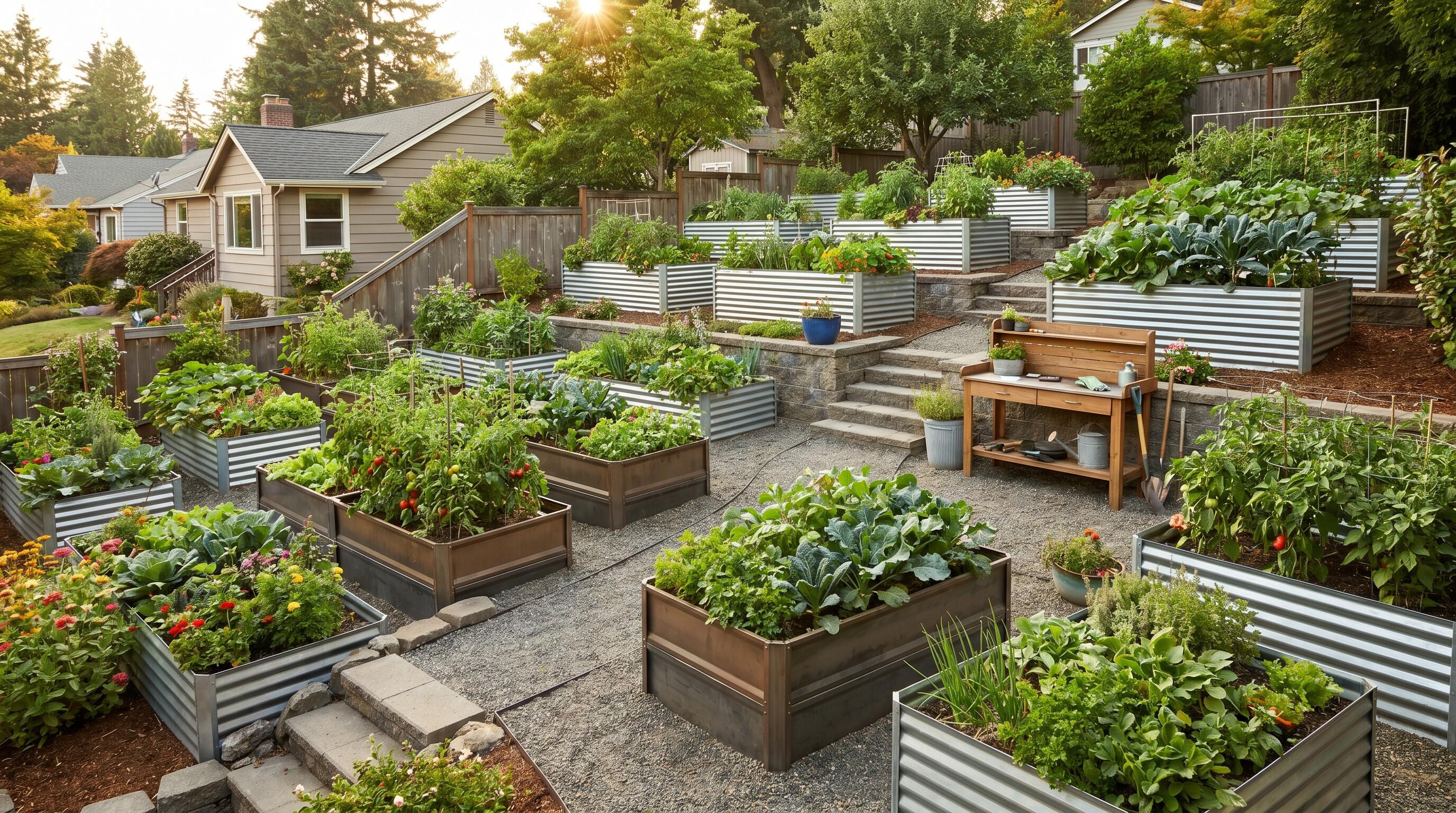
ALT: Terraced Anleolife raised garden beds on a sloped backyard showing a creative raised bed layout for awkward yard shapes and corner lots
Advanced Considerations: Making Your Layout Work for the Long Term
Accommodating Growth and Seasonal Changes
One of the most common mistakes in garden layout planning is designing only for year one. A truly effective raised bed garden layout accounts for how your garden will evolve. Start with the beds that address your most pressing spatial challenges — the corner zone, the narrow side yard — and leave room in your plan for expansion.
Anleolife’s Modular Raised Garden Beds are specifically designed with this in mind. Their flexible, interlocking configurations allow you to start with a smaller footprint and add sections as your gardening ambitions grow, without having to redesign your entire layout.
Debunking Common Misconceptions
Misconception 1: “Raised beds only work in rectangular layouts.”
This is simply not true. Raised garden beds can be arranged in curves, diagonals, L-shapes, and radiating patterns. The key is choosing the right bed size and orienting it to complement your yard’s natural geometry.
Misconception 2: “Awkward yards need expensive landscaping before you can garden.”
In most cases, raised beds are the landscaping solution. By building up above ground level, raised beds sidestep issues like poor native soil, minor slopes, and drainage problems without requiring excavation or professional intervention.
Misconception 3: “Narrow or corner spaces don’t get enough sun to grow food.”
Sun exposure in corner lots is often better than in standard backyards, and even partially shaded narrow side yards can support a productive herb or leafy greens garden. Assess your specific site before making assumptions.
Connecting Your Layout to the Broader Garden Ecosystem
A well-designed garden layout doesn’t stop at the raised beds. Consider how your planting zones connect with other elements of your outdoor space: pathways, seating areas, compost stations, and any animal-raising structures. Anleolife’s broader product ecosystem — which includes chicken coops, rabbit hutches, and decorative accessories alongside the raised bed collection — allows you to design a fully integrated garden environment where each element supports the others.
Frequently Asked Questions FAQ
Q1: How do I determine the best raised bed layout for a triangular corner lot?
Start by measuring the exact dimensions of your triangular zone and identifying where sunlight enters throughout the day. For most corner zones, a single anchor bed placed at a 45-degree angle to the corner point — or a circular bed placed at the apex — creates the most efficient use of space. Work outward from that focal point with pathways and secondary beds. Anleolife’s Round Raised Garden Bed (18″ Tall, 48″ Wide) is an excellent starting point for corner anchor installations, offering both visual impact and generous growing area.
Q2: Are raised garden beds suitable for sloped or uneven backyard terrain?
Yes — raised garden beds are actually one of the most practical solutions for sloped terrain. By positioning beds on the slope and leveling each bed individually, you effectively create a terraced garden without major earthmoving. Anleolife’s Extra Tall and Heavy Duty Raised Garden Beds (available in 24″ and 30″ heights) are structurally robust enough to hold their shape and integrity on uneven ground, and their galvanized steel construction ensures a lifespan of up to 20 years, making them a sound long-term investment even on challenging terrain.
Q3: How long does it take to set up a raised bed layout for an irregular yard, and what does it typically cost?
The planning and layout phase (measuring, sketching, zoning) typically takes one to two weekends. Physical bed assembly and installation can be completed in a single day for most configurations. Costs vary based on the number and size of beds selected. Anleolife ships within 3–8 business days from its strategically located U.S. warehouse network (California, Texas, Florida, New York, Illinois, and Washington), so your beds can arrive quickly after you finalize your plan. Products are available through Amazon, Walmart, Home Depot, Lowe’s, Wayfair, and directly at Anleolife.com.
Summary
Transforming a corner lot or irregular backyard into a productive, beautiful garden is not only possible — it’s one of the most rewarding garden design challenges you can take on. The three core principles to carry forward are:
- Map before you plant. Accurate measurement and zone planning prevent wasted effort and money, and reveal the true potential of spaces that initially seem unusable.
- Follow the geometry, don’t fight it. The most successful non-standard garden layouts use the yard’s natural lines as design features rather than problems to solve. Diagonal bed placements, mirrored L-shapes, and circular anchor beds all turn spatial constraints into visual assets.
- Choose durable, flexible structures. Raised garden beds built from high-quality galvanized steel — with a lifespan of up to 20 years — provide the structural backbone for any irregular layout while offering the flexibility to expand and adapt as your garden grows.
Your next step is simple: grab a measuring tape and a notepad, head outside, and start mapping your space. Once you see your yard’s geometry on paper, the layout possibilities become much clearer.
Start Your Corner Lot Garden Transformation with Anleolife
Nationwide U.S. warehouse network: Strategically located in California, Texas, Florida, New York, Illinois, and Washington, Anleolife ensures delivery within 3–8 business days — so your garden upgrade plans never have to wait for the growing season.
Multi-channel availability: Anleolife products are available on Amazon, Walmart, Home Depot, Lowe’s, and Wayfair, as well as directly at Anleolife.com, providing consistent quality assurance and responsive after-sales support no matter where you shop.
Three core scenarios to build your complete garden: Planting (metal raised garden beds, soil systems), Raising (chicken coops, rabbit hutches), and Beautification (decorative accessories, pathway systems) — meeting the complete needs of your outdoor space from functionality to aesthetics.
We understand that an ideal garden is not built overnight, but gradually improved over time. Anleolife’s modular product design allows flexible expansion based on your needs — from your first raised garden bed anchoring a corner zone to a fully integrated planting-and-raising ecosystem that fills every inch of your unique backyard. We grow with you, every step of the way.
References
- U.S. Department of Agriculture (USDA). “Gardening Resources and Home Food Production”.
https://www.usda.gov/topics/farming/urban-agriculture - University of California Agriculture and Natural Resources. “Planting in Raised Beds”.
https://ucanr.edu/sites/UrbanAg/Grow_Your_Own_Food/Raised_Beds/ - Penn State Extension. “Planning a Vegetable Garden”.
https://extension.psu.edu/planning-a-vegetable-garden - Colorado State University Extension. “Raised Bed Gardening”.
https://extension.colostate.edu/topic-areas/yard-garden/raised-bed-gardening-7-238/ - National Gardening Association. “Garden Planning Resources”.
https://garden.org/learn/
Note: Standards and recommendations may be updated over time. Please check the latest official documents or consult professional advisors for the most current guidance.
About Anleolife
Anleolife is a leading outdoor garden solutions provider in North America, dedicated to offering a full-scenario product ecosystem for home gardening enthusiasts, covering planting, raising, and garden beautification. Since its founding, Anleolife has upheld its brand mission, “Made for Garden Life,” continuously innovating products and optimizing services to help hundreds of thousands of users upgrade their gardens, reconnect with nature, and enjoy a better garden lifestyle. From corner lots to sprawling suburban backyards, Anleolife’s durable, thoughtfully designed raised garden beds and garden accessories help every grower make the most of the space they have — whatever shape it happens to be.
发表回复